
The Classroom as a Stage


This presentation marks one of my earliest forays into applied educational research, a foundational brick in my fascination with supporting learners' academic success by borrowing from my Theatre Arts background.
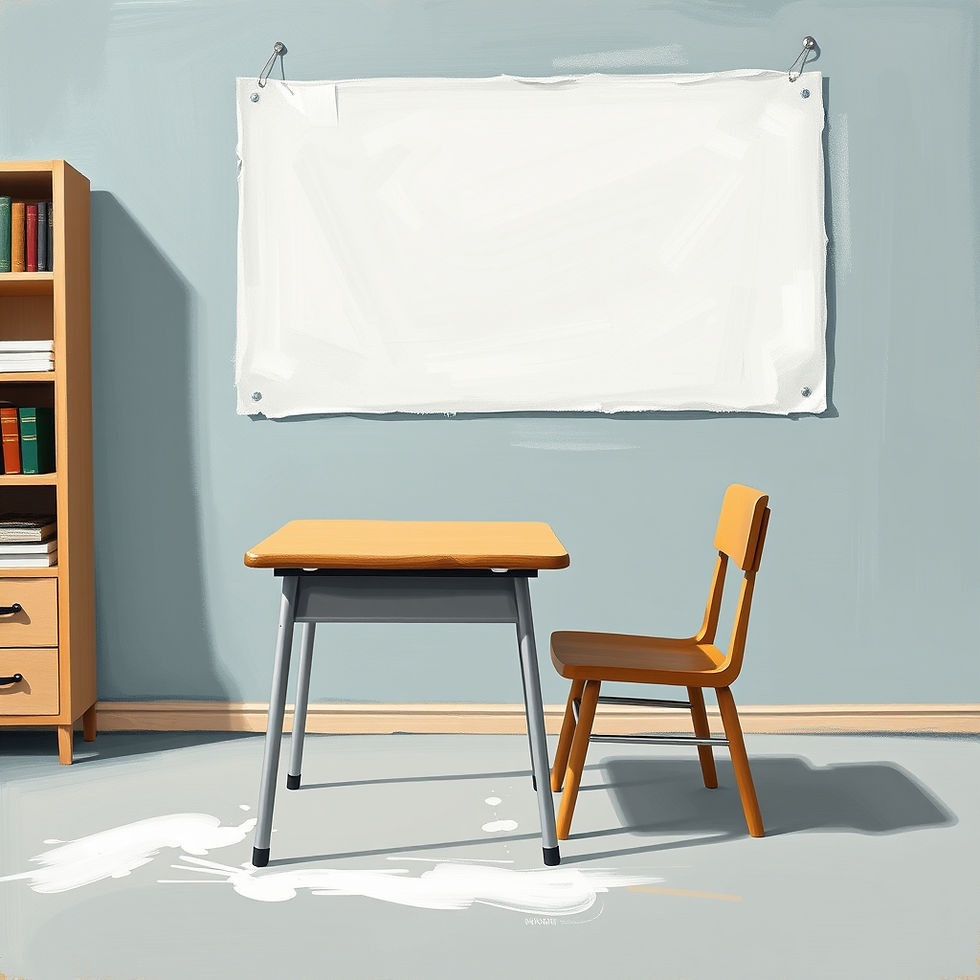
The Psychology of Learning Spaces: My Journey Staging A-Level Literature Classrooms
As educator with a background in theatre and curriculum design , I've always seen the classroom as a stage where environment sets the scene for learners to perform their best. In they particular research, I sort to explore why in which I could reconfigure space, lighting, and color like theatrical elements to boost academic outcomes. This anchored my broader work on arts-based pedagogy for supporting learning.
My Core Research Question
I probed: How can we transform Literature classrooms from static sets into dynamic stages that spark critical analysis? I wanted to view the classroom like underutilized theaters. How can the classroom go beyond housing learners into learning/performance spaces that direct learner energy.
My Methodology
Through observations, field notes, interviews, and questionnaires, beginning with rapport-building "dress rehearsals" I captured narratives form teachers and learners about their use of classroom space. The research comprised of several stages . A visit to 4 different literature learning spaces forming relationships and conducting formal and informal discussions.
Research instruments included: Field notes, interviews, questionnaires.
Data Collection Methods :This research adopted narrative and descriptive techniques to acquire and analyse data.
My Theoretical Lens: The Stage Metaphor
Inspired by Bachelard, Foucault, and Freire, I view space as a stage mediating power and identity and like a proscenium arch's, rigid rows trap performers, while flexible blocking (h Horseshoe or circular) democratizes the action, cueing collaboration. Foucults (1997) notes how the psycho social conceptions of space and its relations to student security and identity has an effect on the gaining and retention of knowledge . The works of Freire (1987) Foucult (2002), Alexander (2000) and Bachelard (1958) Brooks (2012) discuss how the arrangement of space can affect the balance and transference of power in the classroom.
Lighting: Setting the Mood
Well-lit "spotlights" enhance visibility and comfort, banishing "shadowy wings" of dim hallways that distract like poor follow-spots, mirroring how stage lighting lifts actors' focus and energy.
Human requirements addressed by lighting:
Visibility, task performance, visual comfort, interpersonal relationships.
The research observed the relationship between lighting and learners. In the language classroom learners read from many different surfaces therefore adequate lighting is paramount.
When listing the various conditions that have caused learners to miss school, headaches, toothaches and fatigue where part of the list.
Drawing parallels between Karpen (1993) and Barnett (2003) Mahone (2003) and the research makes a case for the consideration of physical elements for the improvement of performance in the literature classroom.
Color: Backdrops
Engelbrecht (2003) Martinez, Oberle and Thompson (2010) offer a semiotic analysis of colour that was relevant to the study.
Effects of colour on memory encoding and retrieval of knowledge in the classroom:
As humans we have a biological reaction to colour and how colour is transmitted through the eye affects mood, mental clarity and energy levels of learners.
In the case of High school learners the research provided evidence of the notion that adolescents prefer more subdued colours.
Use of colour sets the stage for change in perception, size, cooperation, behaviour, productivity and concentration.
Space as Blocking: Directing the Action
Horseshoe "entr'actes" create "action zones" for peak participation, like precise stage blocking; movable "props" enable ensemble discussions, eclipsing rowed "audience seating" that silences performers. Seating position in the classroom relates to the frequency of participation, levels of attentiveness, and self esteem.
The literature on ergonomic seating and positioning was studied using Yeats (1997), Knights and Noyes (1999) advocate for an in-depth consideration when selecting school furniture and its arrangement .
This research notes how teachers deliberately made use of the horseshoe, cafe style or circular cluster during literature classes .
These empirical findings of the research confirmed the notion “action zone” of increased participation.
Outcomes: Standing Ovations
Teachers noted tighter "cast chemistry" and adaptable "run-throughs"; students owned their "roles" with motivation.
Data from the study suggested the following:
Configuration of space received a very positive response from both the teachers and the students.
Teachers state that the overall relationship with their students deepened when they set up the classroom for active learning.
Staff felt that by providing alternative learning spaces and making relevant configurations, the class became more flexible and responsive.
Learning space plays an important part in creating a fluid learning environment, students self esteem and socialization.
English literature students revealed that spatial arrangement, lighting, and colours are valuable in influencing their performance.


Comments